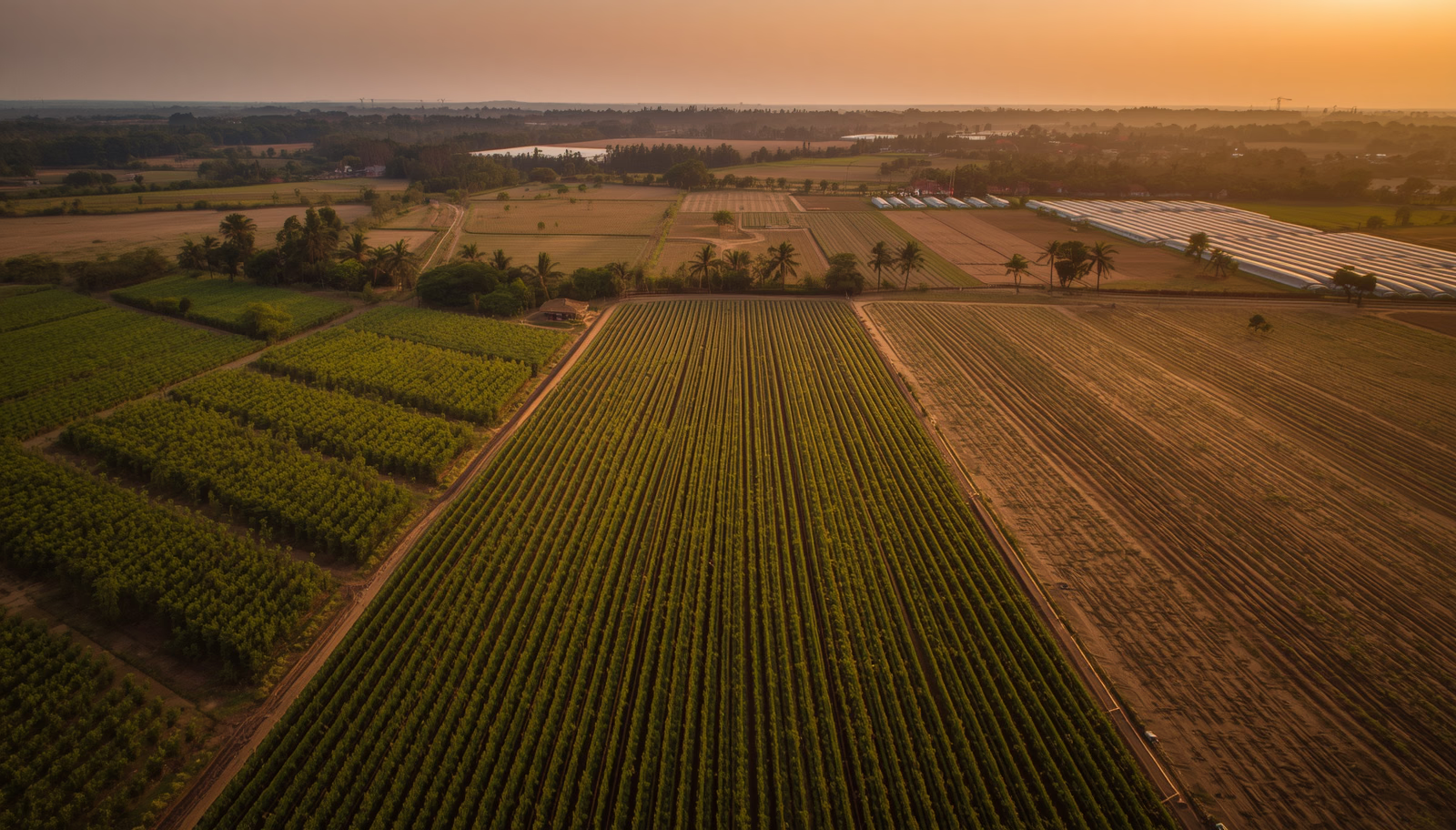

Polyhouse vs Open Field: Choosing the Right Cultivation Model
A practical, no-hype comparison of protected cultivation and open field farming — capital cost, yield, and payback period for ginger and turmeric growers.
If you grow ginger or turmeric — or you're planning your first crop — you've probably heard both sides of the argument. Some farmers swear by their open fields. Others have gone all-in on polyhouses and won't look back. The truth is simpler than either camp makes it sound: both models work. The right choice depends on how much capital you have, how much risk you're comfortable carrying, and how many years you're planning for.
This article lays out the numbers — capital cost, yield, and payback period — using published data from ICAR institutes, the National Horticulture Board (NHB), and recent industry cost studies. No hype, no "guaranteed profits." Just the figures you need to make an informed decision, with sources listed at the end so you can dig deeper yourself.
Two Ways to Grow the Same Crop
Before the numbers, it helps to be clear on what each model actually involves.
Open Field Cultivation
Ginger or turmeric grown directly in prepared soil beds under natural weather, using ridges and furrows, farmyard manure, and seasonal irrigation. This is the traditional model followed across most of India's ginger and turmeric belts.
Protected / Soilless Polyhouse
Crop grown inside a naturally ventilated polyhouse, often in grow bags or troughs filled with cocopeat instead of soil, with drip fertigation controlling nutrients precisely. Weather, pests, and soil-borne disease are largely engineered out of the equation.
What Will It Actually Cost You Upfront?
This is where the two models part ways most dramatically. Open field cultivation is a seasonal input cost — you spend it, harvest within months, and start again. A polyhouse is a multi-year capital asset — you build it once and use it for 7–10 years.
The key thing to understand: NHB's 50% subsidy applies only to the structure cost norm, not the soilless growing system on top of it — so your real out-of-pocket share after subsidy still runs into several tens of lakhs per acre. Open field farming, by contrast, needs no such capital outlay — your entire cost is working capital you recover (hopefully with profit) at the end of a single season.
How Much More Do You Actually Get?
This is the number that makes protected cultivation tempting — and it's real, but it needs context. Controlled temperature, pest exclusion, precise fertigation, and much higher planting density all push yields up. The gain is well documented for turmeric grown in soilless grow-bag systems; for ginger, published research shows a strong positive effect but fewer large-scale commercial benchmarks exist yet.
Notice the dashed, hatched bar for ginger — that's deliberate. Unlike turmeric, there isn't yet a widely published, large-scale commercial yield figure for soilless ginger in India the way there is for turmeric. The 2–3× range is a reasonable, conservative read of the available research, not a marketing number.
When Do You Actually Break Even?
Higher yield doesn't automatically mean faster returns — because the two models are recovering completely different amounts of capital. Open field farming recovers a small seasonal cost almost immediately. A polyhouse is recovering a large one-time investment, so it needs several good seasons in a row.
Quick Comparison Table
| Factor | Open Field | Protected / Soilless Polyhouse |
|---|---|---|
| Upfront capital (per acre) | ₹1.3 – 1.6 lakh | ₹35 – 60 lakh (before / after subsidy) |
| Crop cycle | 7 – 10 months | 7 – 9 months (can run more cycles/year in some setups) |
| Weather & disease risk | Fully exposed | Largely controlled |
| Water use | Standard flood/drip | 50 – 70% lower, via precision fertigation |
| Government subsidy support | Limited (input subsidies only) | Up to 50%+ under NHB/MIDH, plus state top-ups |
| Break-even timeline | Same season | 3 – 6 years |
| Skill & monitoring needs | Moderate | High — EC/pH, fertigation schedules, ventilation |
So, Which Model Fits You?
There's no universally "right" answer here — only the right answer for your land, capital, and appetite for risk.
☀️ Open Field May Suit You If…
- You want to start this season with limited capital
- You already have suitable land and irrigation access
- You're testing the crop or market before scaling up
- You prefer lower complexity and fewer things to monitor daily
🏡 Protected Cultivation May Suit You If…
- You can access bank financing and NHB/MIDH subsidy support
- You're planning a 7–10 year commercial horticulture business
- Your region faces erratic rainfall, extreme heat, or high soil-borne disease pressure
- You're targeting premium, export-oriented, or off-season markets
Bottom line: Open field farming remains a sound, low-capital way to grow ginger and turmeric — especially for first-time or smaller growers. Protected, soilless cultivation delivers meaningfully higher yields and quality but demands significant capital, multi-year commitment, and disciplined day-to-day management. Many successful growers actually start in open fields and transition to protected cultivation once they've built market linkages and working capital.